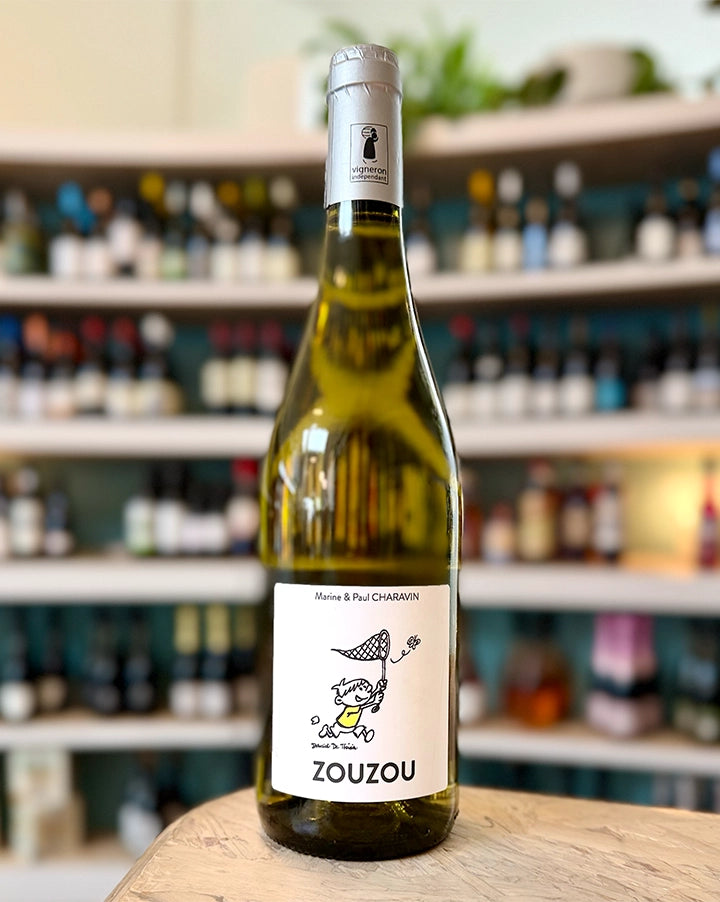
Coteaux des Travers 'Zouzou' 2025 Blanc Côtes du Rhône
Coteaux des Travers 'Zouzou' 2025 Blanc Côtes du Rhône
750ml bottle
12.5% abv
White peach, citrus, and white flowers with a gentle herbal note. Medium-bodied, fresh acidity, soft texture, clean finish.
Grenache Blanc, Marsanne, Roussanne and Clairette. High-altitude, biodynamically farmed vineyards on the pebble-strewn hills of the Massif d'Uchaux, southern Rhône. Biodyvin certified biodynamic.
Fermented and aged in neutral tanks at low temperature. No oak. Minimal sulfur added.
A new range of wines to differentiate the family's Côtes du Rhônes from the Coteaux des Travers wines. ZouZou (a jovial, dynamic person who is always fun to be around) is the nickname of Paul's best friend. In honor of him, they crafted this lighter and fruitier wine using carbonic maceration, fermented and aged in concrete vats. Little-to-no sulfur is added. It's bottled early in order to preserve the naturally fresh fruit. It is full of velvety blueberry with spice and low tannin. Eminently drinkable red wine.
Charavin is a common name in Rasteau, and there are 4 wine producers who carry it. Domaine des Coteaux de Travers (literally “domaine of the slopes on the side of the rising sun”) is owned by one of those Charavins, Robert. Its history dates back to Robert's grandfather Elie, who began cultivating the vines in 1931.
Following the Second World War, the domaine expanded greatly. Robert Sr. took over in 1955 and, in 1976, sold his first wines in bottle. Robert Jr. took over the domaine in 1985. Today there are 14 hectares total: 10 in Rasteau and 4 more recently added in neighboring Cairanne. In Rasteau, the soil is particularly rich in clay with an exceptionally sloped southern exposure. The vineyard soil in Cairanne is divided between sandy, clay and garrigue soils (rich in iron which give it a red color).
Robert began giving up weed-killers and synthetic sprays around 2008 and since 2012, has been certified biodynamic by Demeter. Charavin works rigorously in the vineyard plows between his rows of vines to encourage healthy underground life.
Leaf plucking and a small green harvest to limit yields and maximize concentration have become the norm. Harvest is normally in early September and is done entirely by hand, with any bad grapes left on the ground. After that, a sorting table manned by ten people make sure that only grapes of exceptional quality make it into the tanks.
Share