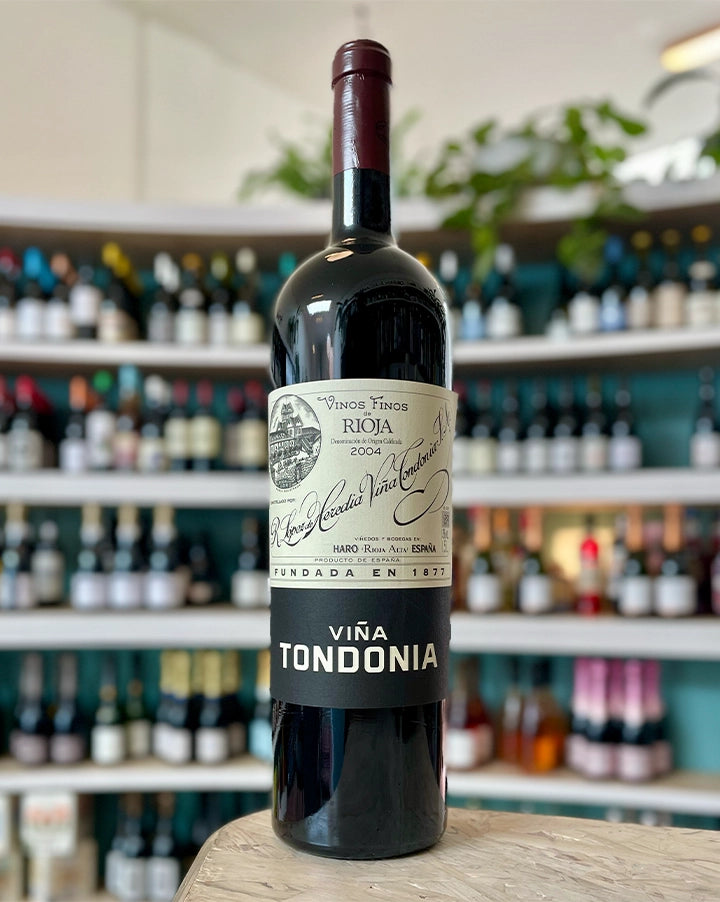
López de Heredia 'Viña Tondonia' 2004 Reserva Rioja MAGNUM
López de Heredia 'Viña Tondonia' 2004 Reserva Rioja MAGNUM
1500ml
13% abv
Aromas of dill, rose petal, incense, coffee, forest floor, dried red fruit, and fig. On the palate, chalky freshness, savoury and granular tannins, tobacco leaf, winter spice, and red berries with enough backbone to continue aging. Drinking prime, 2024 through 2035.
75% Tempranillo, 15% Garnacha, 10% Graciano and Mazuelo. All organically farmed estate fruit from Viña Tondonia.
Viña Tondonia is a 110-hectare single parcel on the right bank of the Ebro River in Rioja Alta, enclosed on three sides by a meander in the river. Chalky clay soils. Average vine age over 45 years. The microclimate created by the river moderates temperature extremes and produces slow, even ripening.
Harvest commenced October 11, 2004, in ideal conditions. Fermented with indigenous yeasts in 153-year-old oak vats. The Reserva received approximately 6 years in used American oak barrels, racked twice annually and fined. Rested unfiltered in bottle before release.
The 2004 Tondonia Reserva is widely regarded as one of the finest recent vintages from this house, second only to the 2001 in the estimation of most critics. Now two decades beyond vintage, the wine is in active maturity, drinking well now to 2035 and beyond. The Reserva sits below the Gran Reserva in the hierarchy and is typically released several years earlier; at this age the distinction between the two has largely dissolved, and the Reserva is showing the full complexity of the house style.
R. López de Heredia was founded in 1877 by Rafael López de Heredia y Landeta, who came to Haro during the construction of the railroad and recognized the commercial opportunity of connecting Rioja's wines to European markets. He built his bodega, aging galleries, and vineyards over the following decades, including the Tondonia vineyard in 1913. The estate is now in its fourth and fifth generations, currently led by María José López de Heredia. Everything at the property is done as it was at the outset: indigenous yeast fermentation in ancient wooden vats, extended aging in used American oak, racking by hand, egg white fining, no filtration, and release only after years of bottle rest. The winery does not use any modern oenological additives. The bodega in Haro, with its extraordinary aging galleries, is a working monument to 19th-century winemaking practice.
Share