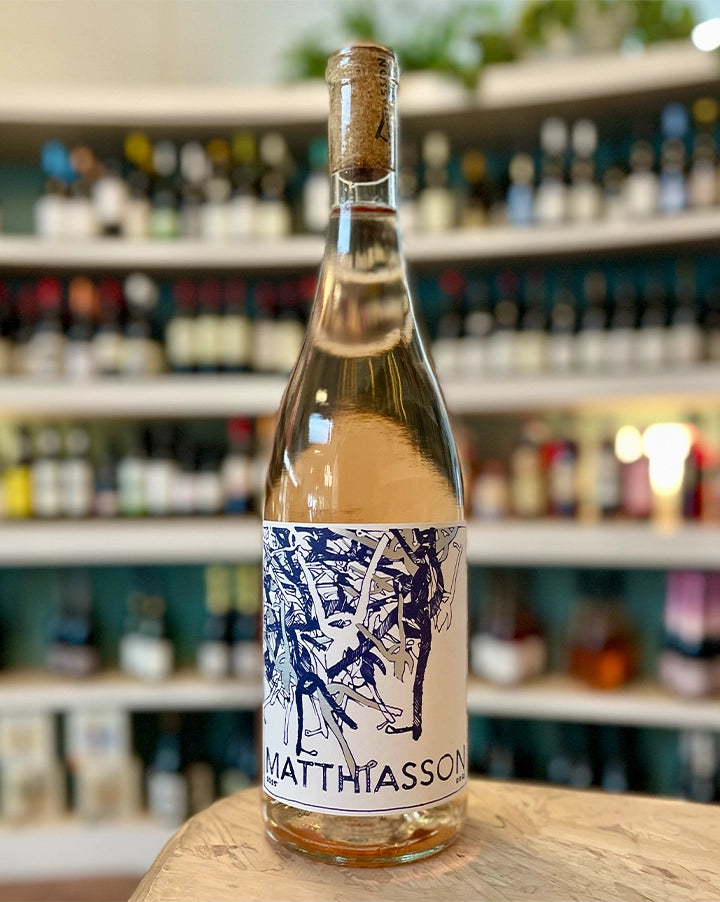
Matthiasson 2025 Rosé California
Matthiasson 2025 Rosé California
750ml bottle
12% abv
Clean, dry, refreshing, and feather-light, with salty-citrusy aromas and a clean finish reminiscent of Provençal rosés. Naturally low in alcohol but full of refreshing acidity.
Direct to press, whole cluster, Champagne cycle. Stainless steel fermented, aged sur lie.
The 2025 fruit is all from the Windmill Vineyard, situated on pinkish gravelly alluvial soils in the Dunnigan Hills AVA of Yolo County. Sergio Villanueva (whom Steve taught viticulture) farms the Windmill Vineyard and carefully nurtures it with tremendous pride. This is a hot climate, and the fruit ripens fast, allowing us to harvest ripe fruit earlier while it still boasts low sugar levels and balanced acidity, keeping the finished wine's alcohol moderate and the texture soft and light.
The blend is predominately Grenache, Barbera, Counoise, and Mourvèdre, which have been the backbone of our Rosé blend for the past several vintages. The Grenache adds texture and subtle notes of strawberry; Mourvèdre provides minerality; Counoise lends darker red fruit notes; and Barbera brings refreshing acidity.
In 2025, we added Montepulciano and Vermentino to the mix. Both varieties have a long history of use in rosé wine production in Europe. Montepulciano is native to Abruzzo in Southern Italy and is used to make Cerasuolo d’Abruzzo — a darker, more structured rosé that sees a brief amount of skin contact. Vermentino (known as Rolle in France) is a common white grape blending component in Provençal roses. The Montepulciano boosts the red fruit notes and adds a bit of depth, and the Vermentino enhances the citrus flavors and salty minerality that Matthiasson Rosé fans have come to love.
After an early harvest so as to preserve lots of fresh acidity, we gently whole-cluster press the grapes, settle the juice in a cold tank for 24 hours, then ferment and age the wine sur lie in stainless steel barrels. After primary fermentation is complete, we top the stainless steel barrels all the way up and keep the barrels shut tight, with no stirring or additional topping until bottling. Malolactic fermentation is prevented to preserve the natural acidity.
Many producers of rosé just take some of their red wine production grapes and press the juice sooner off its skins, resulting in a rosé that’s literally just a lighter-colored and -bodied version of their red.
We actually grow all our rosé fruit specifically for our rosé, which means that we keep the vines a little happier (aiming for larger, juicier berries) and the fruit more shaded than we would if we were using it for red wine. This results in plump, juicy, thin-skinned grapes that are vibrant and refreshing. To capture their zesty brightness, we harvest very early — barely past veraison, or the turning of the grapes’ color from green to red as it ripens — at a level of ripeness similar to what we’d pick for sparkling wine. In this way, we capture the fruit when it is still high-toned, crisp, and refreshing. – winemakers' notes
pH - 3.4
TA 7.2 g/l
1,205 cases produced.
Share