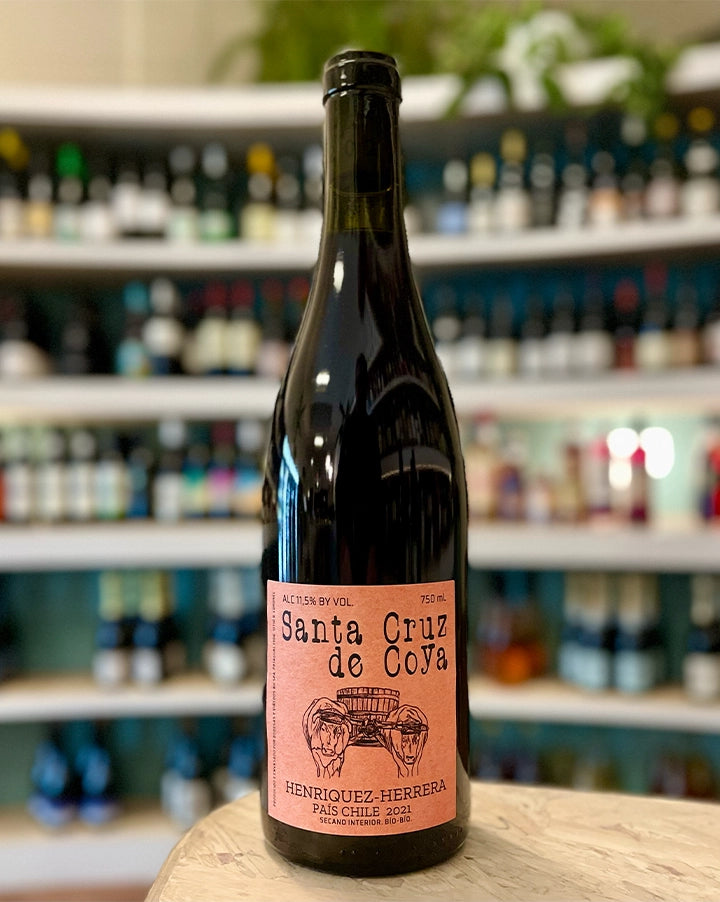
Roberto Henriquez 'Santa Cruz de Coya' 2021 País Bío Bío, Chile
Roberto Henriquez 'Santa Cruz de Coya' 2021 País Bío Bío, Chile
750ml bottle
11.5% abv
Delicate nose of dried red fruits, pomegranate, blood orange, and grapefruit. The palate is similarly high-toned, clean, and vivid, with a silky frame and a gently turbid texture. The nuanced yet persistent finish shows fine-grained tannins and mineraality.
100% País from 200-year-old vines planted between pine and eucalyptus trees. Located in the Nahelbuelta Mountains of Nacimiento, its soils are granitic intrusive (solidified magma). The vines were managed traditionally without the addition of chemical fertilizers or herbicides.
Santa Cruz de Coya is the name of the nearby village established in 1595 that was a key site of the 1598-1599 uprising that ended the Era of the Conquista. The Mapuches finally won the battle against the Spanish conquistadors.
The Bío Bío Valley is one of Chile’s most historic—and extreme—wine regions, and Roberto Henriquez is in the vanguard of its quality-focused producers. At his self-named winery, he preserves the region’s winemaking traditions and native varieties with light-bodied, refined, site-specific wines from ancient vineyards.
Ever since stepping foot in his uncle’s vineyards as a child, Henriquez knew he belonged between rows of vines. After studying agronomy and enology at the University of Concepción and working at large Chilean wineries, he embarked on a globetrotting winemaking jaunt with stops in Canada, South Africa, and France’s Loire Valley, where leading natural winemaker René Mosse sparked his passion for biodynamic viticulture.
But the vineyards of his homeland were calling, and at age 29, Roberto returned to Bio Bío with the mission of rescuing and showcasing some of South America’s oldest vines. These free-standing País vines on the banks of the Biobío River have endured 200–250 years in the southern region’s cool, windy climate. After carefully selecting his vineyards, he founded the Roberto Henriquez winery in 2015.
Henriquez farms all the vineyards himself without herbicides or pesticides, providing no irrigation and adhering to organic and sustainable principles like composting, bio-fertilizers, and water conservation. Yet he’s not just looking to preserve the region’s ancient vines, he wants to preserve its traditional pipeño methods too. That means employing natural winemaking techniques like carbonic maceration, using native yeasts, aging in old Rauli wood barrels, and bottling without filtration or chemicals—all by hand.
As Henriquez’s local project has grown from a 400-bottle production to an internationally renowned winery, he’s expanded his vineyard portfolio to include old-vine plots of white varieties like Semillon, Muscat of Alexandria, Chasselas, and Torontés. Every vineyard he farms and every bottle he makes, he does so with a profound respect for Chile’s extensive winemaking history.
Share